

Rimpa: Decorative Japanese Painting
Rimpa: Decorative Japanese Painting
Couldn't load pickup availability
Author(s): Toshinobu Yasumura
Publication year: 2011
Publication date: 2011-10-04
Pages: 400
Binding: Paperback
Language: English
Publisher: PIE Books
Condition: Like NewISBN: 9784894448988
Dimensions: 5.86 x 1.45 x 8.27 in
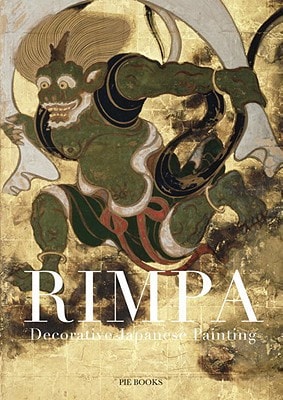
A collection of dazzling and daring Japanese traditional art. Rimpa, one of the major art movements of Japanese painting, was founded in Kyoto in the seventeenth-century by Hon’ami Koetsu and Tawaraya Sotatsu. Years later, the style blossomed under brothers Ogata Korin and Ogata Kenzan and then was consolidated and popularized in Edo by Sakai Hoitsu and Suzuki Kiitsu. A characteristic feature of Rimpa is its rich decorative style, such as backgrounds with gold leaf, based on the classical Yamato-e style. Simple natural subjects such as birds, flowers, and plants were often used as motifs. Rimpa artists worked in various formats, notably folding screens, hanging scrolls, fans, woodblock-printed books, lacquerware, ceramics, and textiles. Many Rimpa paintings appeared on sliding doors and walls of noble homes. The bold outlines and striking color schemes are features of Rimpa style. Emphasis on refined design and technique became more pronounced as Rimpa style developed.
Shipping & Returns
Shipping & Returns
Shipping costs are calculated based on the weight of the item and the delivery location. We ship via Media Mail or Ground Advantage through USPS.
Shop with Confidence!
We stand by the quality of our books. If for any reason you’re unsatisfied with your purchase, we offer a 100% full refund along with free return shipping.
Share
Book Condition Scale
-
Like New
This book is in excellent condition and appears to have been read only once. The pages are clean and unmarked, with no creases or stains. The binding remains firm and tight. There may be minimal signs of shelf wear on the cover or dust jacket, but overall, the book looks and feels nearly new.
-
Very Good
This book has been read but remains in great condition. It does not look new, yet there is no obvious damage to the cover. Wear and tear are minimal. The pages are clean, free of highlighting or notes, though it may contain identifying marks from a previous owner or bookstore.
-
Good
This book shows moderate to heavy signs of wear that can include creases, stains or tears. The cover may have minimal damage, and the binding remains intact with slight wear. The majority of pages are undamaged, though there may be some highlighting, underlining, or notes. It may also contain identifying marks from a previous owner or bookstore.
-
Acceptable
This book shows significant wear, which may include tears, large stains, creases, loose pages, and heavy notes, underlining, or highlighting. The binding may be loose but remains intact. While it has noticeable imperfections, it is still a complete and readable copy. Any major defects will be clearly noted in the listing.
-
As Is
This book is visibly worn and may be heavily soiled, scuffed, stained, or spotted. It may have loose joints, hinges, or pages, and some text or pages may be missing. Large tears and other significant defects may be present. While still a readable copy, it shows substantial signs of use. Any major flaws will be clearly noted in the listing.
-
Dust Jacket Grading
(A) Excellent
The dust jacket is in excellent condition, may show the slightest signs of shelf wear, if any.(B) Good
Shows minor shelf wear, usually along edges and may have a few light stains.(C) Fair
Displays moderate shelf wear, including some noticeable small tears, creasing and/or stains.(D) Poor
Contains large tears, several creases, and/or heavy staining.(F) As Is
Shows significant wear and tear. Majority of dust jacket is torn or missing. May contain heavy staining.
