


Authority in Islam: From the Rise of Mohammad to the Establishment of the Umayyads
Authority in Islam: From the Rise of Mohammad to the Establishment of the Umayyads
Couldn't load pickup availability
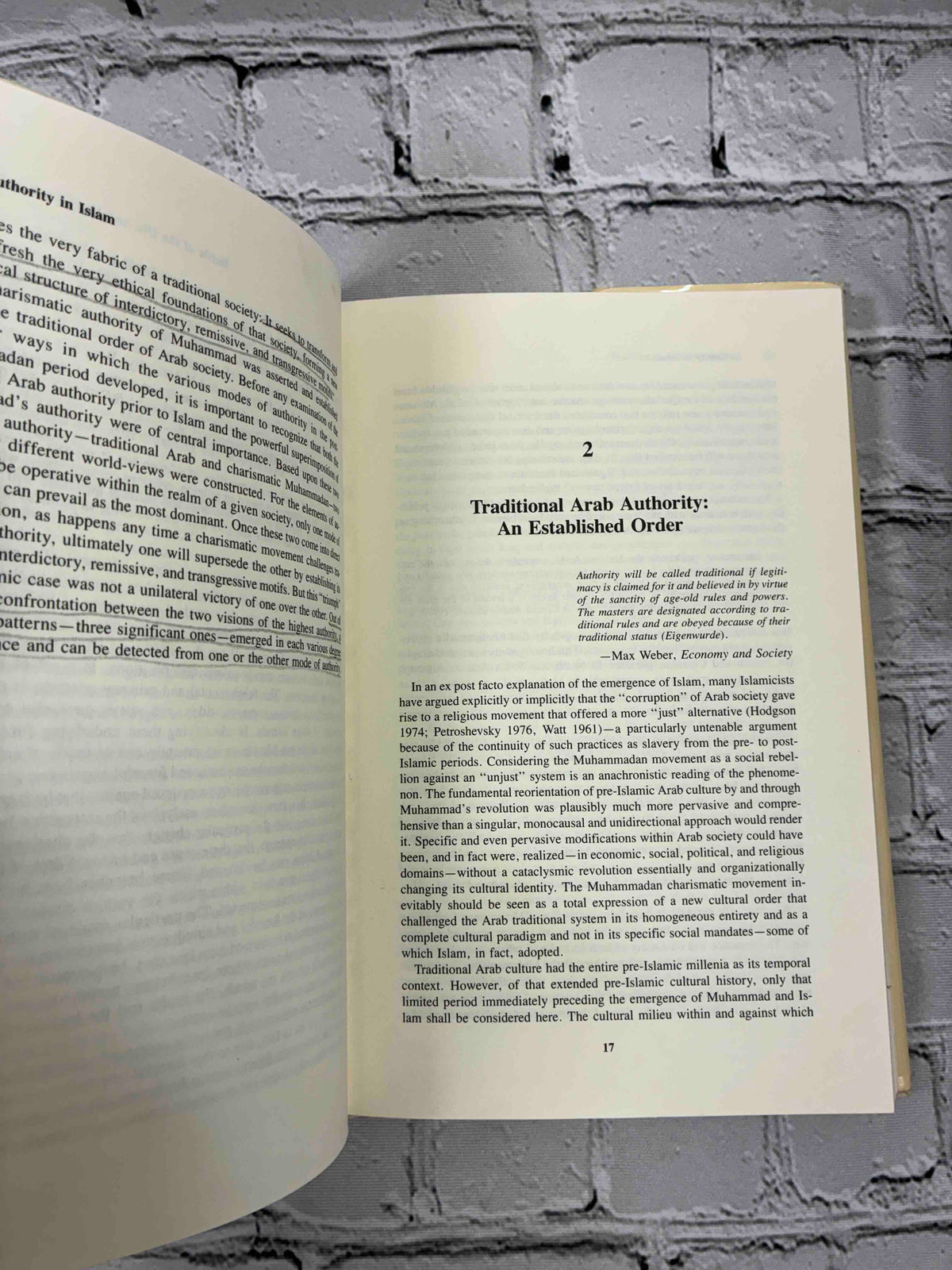
Book Notes: Contains Minor shelf wear. Page are clean and in great shape. Binding is tight.
Author(s): Hamid DabashiEdition: 1st Edition
Publication year: 1989
Publication date: 1989-09-30
Pages: 196
Binding: Hardcover
Language: English
Publisher: Routledge
ISBN: 0887382886Dimensions: 6.24 x 0.64 x 9.24 in
From the origins of Muhammad's prophetic movement through the development of Islam's principal branches to the establishment of the Umayyad dynasty, the concept of authority has been central to Islamic civilization. By examining the nature, organization, and transformation of authority over time, Dabashi conveys both continuities and disruptions inherent in the development of a new political culture. It is this process, he argues, that accounts for the fundamental patterns of authority in Islam that ultimately shaped, in dialectical interaction with external historical factors, the course of Islamic civilization.
The book begins by examining the principal characteristics of authority in pre-Islamic Arab society. Dabashi describes the imposition of the Muhammadan charismatic movement on pre-Islamic Arab culture, tracing the changes it introduced in the fabric of pre-Islamic Arabia. He examines the continuities and changes that followed, focusing on the concept of authority, and the formation of the Sunnite, Shiite, and Karajite branches of Islam as political expressions of deep cultural cleavages. For Dabashi, the formation of these branches was the inevitable outcome of the clash between pre-Islamic patterns of authority and those of the Muhammadan charismatic movement. In turn, they molded both the unity and the diversity of the emerging Islamic culture. Authority in Islam explains how this came to be.
Dabashi employs Weber's concept of charismatic authority in describing Muhammad and his mode of authority as both a model and a point of departure. His purpose is not to offer critical verification or opposition to interpretation of historical events, but to suggest a new approach to the existing literature. The book is an important contribution to political sociology as well as the study of Islamic culture and civilization. Sociologists, political scientists, and Middle Eastern specialists will find this analysis of particular value.
Shipping & Returns
Shipping & Returns
Shipping costs are calculated based on the weight of the item and the delivery location. We ship via Media Mail or Ground Advantage through USPS.
Shop with Confidence!
We stand by the quality of our books. If for any reason you’re unsatisfied with your purchase, we offer a 100% full refund along with free return shipping.
Share


Book Condition Scale
-
Like New
This book is in excellent condition and appears to have been read only once. The pages are clean and unmarked, with no creases or stains. The binding remains firm and tight. There may be minimal signs of shelf wear on the cover or dust jacket, but overall, the book looks and feels nearly new.
-
Very Good
This book has been read but remains in great condition. It does not look new, yet there is no obvious damage to the cover. Wear and tear are minimal. The pages are clean, free of highlighting or notes, though it may contain identifying marks from a previous owner or bookstore.
-
Good
This book shows moderate to heavy signs of wear that can include creases, stains or tears. The cover may have minimal damage, and the binding remains intact with slight wear. The majority of pages are undamaged, though there may be some highlighting, underlining, or notes. It may also contain identifying marks from a previous owner or bookstore.
-
Acceptable
This book shows significant wear, which may include tears, large stains, creases, loose pages, and heavy notes, underlining, or highlighting. The binding may be loose but remains intact. While it has noticeable imperfections, it is still a complete and readable copy. Any major defects will be clearly noted in the listing.
-
As Described
This book is visibly worn and may be heavily soiled, scuffed, stained, or spotted. It may have loose joints, hinges, or pages, and some text or pages may be missing. Large tears and other significant defects may be present. While still a readable copy, it shows substantial signs of use. Any major flaws will be clearly noted in the listing.
-
Dust Jacket Grading
(A) Excellent
The dust jacket is in excellent condition, may show the slightest signs of shelf wear, if any.(B) Good
Shows minor shelf wear, usually along edges and may have a few light stains.(C) Fair
Displays moderate shelf wear, including some noticeable small tears, creasing and/or stains.(D) Poor
Contains large tears, several creases, and/or heavy staining.(F) As Is
Shows significant wear and tear. Majority of dust jacket is torn or missing. May contain heavy staining.
