


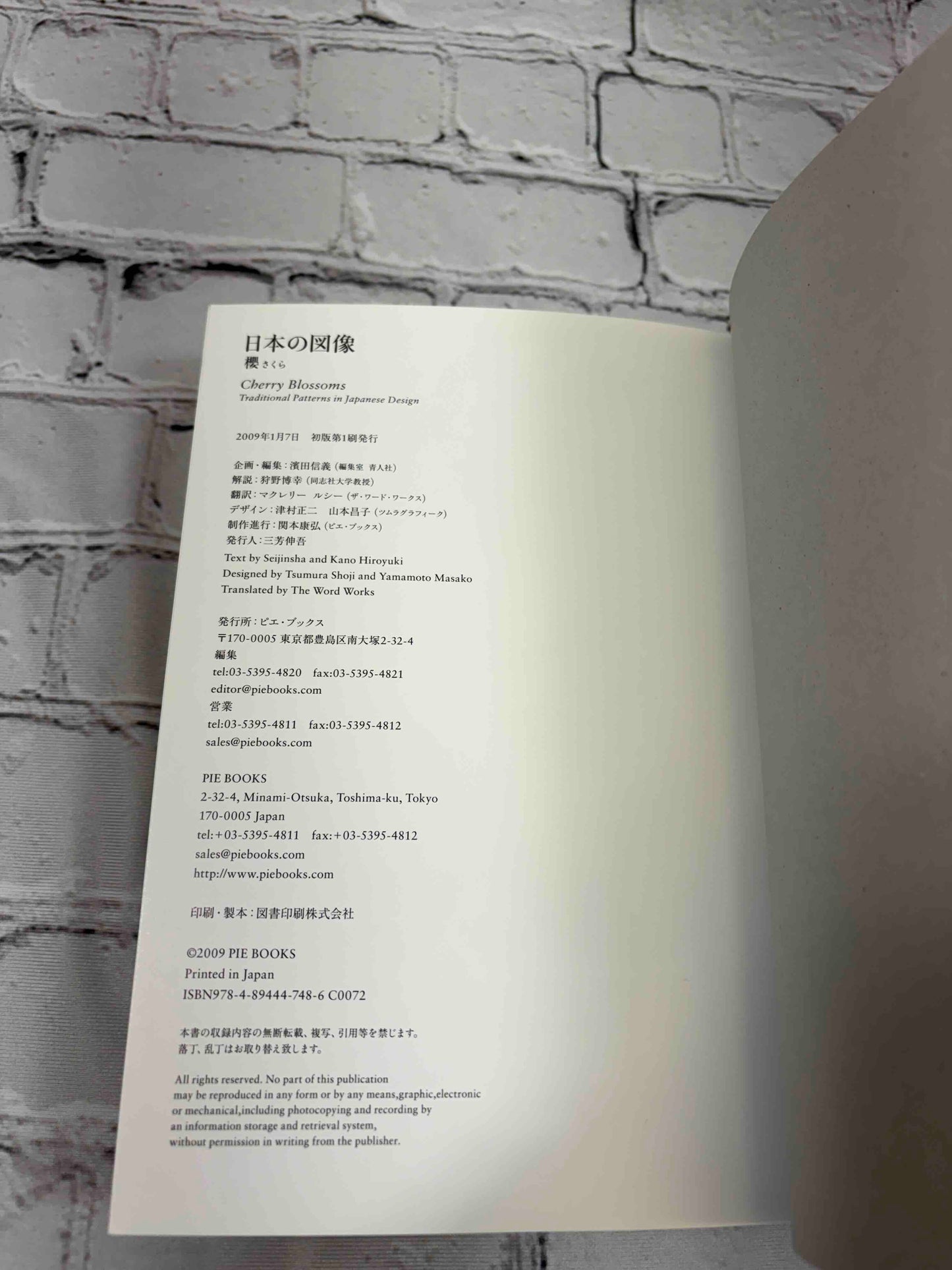
Cherry Blossoms: Traditional Patterns in Japanese Design
Cherry Blossoms: Traditional Patterns in Japanese Design
Couldn't load pickup availability
Author(s): Nobuyoshi Hamada
Edition: 1st Edition
Publication year: 2009
Publication date: 2009-10-06
Pages: 400
Binding: Paperback
Language: English/Japanese
Publisher: PIE Books
ISBN: 9784894447486Dimensions: 5.9 x 1.5 x 8.3 in
The cherry blossom is considered a national flower in Japan. It has been celebrated for many centuries and holds a very prominent position in Japanese culture. The Chronicle of Japan, the second oldest book in classical Japanese history, records the tradition of cherry blossom viewing parties being held as early as the third century. The imperial households, poets, singers, and other aristocrats would gather and celebrate under the blossoms and it has been passed down through the generations. This tradition continues today as the Japanese Meteorological Agency and the public track the cherry blossom front as it moves northward up the country. The Japanese people pay close attention to these forecasts and turn out in large numbers at parks, shrines, and temples with family and friends to hold flower-viewing parties. In 1912, Japan gifted 3,020 cherry trees to the United States to celebrate their growing-friendship. These trees were planted in Manhattan and along the shore of the tidal basin in Washington, D.C. This gift was renewed with 3,800 more trees in 1965. A new title in the traditional patterns series, this book shows another Japanese traditional motif, the cherry blossom. About 220 works are featured in the book dating from the eighth-century through the twentieth-century, including such artists as Hiroshige and Taikan Yokoyama.
Shipping & Returns
Shipping & Returns
Shipping costs are calculated based on the weight of the item and the delivery location. We ship via Media Mail or Ground Advantage through USPS.
Shop with Confidence!
We stand by the quality of our books. If for any reason you’re unsatisfied with your purchase, we offer a 100% full refund along with free return shipping.
Share


Book Condition Scale
-
Like New
This book is in excellent condition and appears to have been read only once. The pages are clean and unmarked, with no creases or stains. The binding remains firm and tight. There may be minimal signs of shelf wear on the cover or dust jacket, but overall, the book looks and feels nearly new.
-
Very Good
This book has been read but remains in great condition. It does not look new, yet there is no obvious damage to the cover. Wear and tear are minimal. The pages are clean, free of highlighting or notes, though it may contain identifying marks from a previous owner or bookstore.
-
Good
This book shows moderate to heavy signs of wear that can include creases, stains or tears. The cover may have minimal damage, and the binding remains intact with slight wear. The majority of pages are undamaged, though there may be some highlighting, underlining, or notes. It may also contain identifying marks from a previous owner or bookstore.
-
Acceptable
This book shows significant wear, which may include tears, large stains, creases, loose pages, and heavy notes, underlining, or highlighting. The binding may be loose but remains intact. While it has noticeable imperfections, it is still a complete and readable copy. Any major defects will be clearly noted in the listing.
-
As Described
This book is visibly worn and may be heavily soiled, scuffed, stained, or spotted. It may have loose joints, hinges, or pages, and some text or pages may be missing. Large tears and other significant defects may be present. While still a readable copy, it shows substantial signs of use. Any major flaws will be clearly noted in the listing.
-
Dust Jacket Grading
(A) Excellent
The dust jacket is in excellent condition, may show the slightest signs of shelf wear, if any.(B) Good
Shows minor shelf wear, usually along edges and may have a few light stains.(C) Fair
Displays moderate shelf wear, including some noticeable small tears, creasing and/or stains.(D) Poor
Contains large tears, several creases, and/or heavy staining.(F) As Is
Shows significant wear and tear. Majority of dust jacket is torn or missing. May contain heavy staining.
