


Driving While Black: African American Travel and the Road to Civil Rights
Driving While Black: African American Travel and the Road to Civil Rights
Couldn't load pickup availability
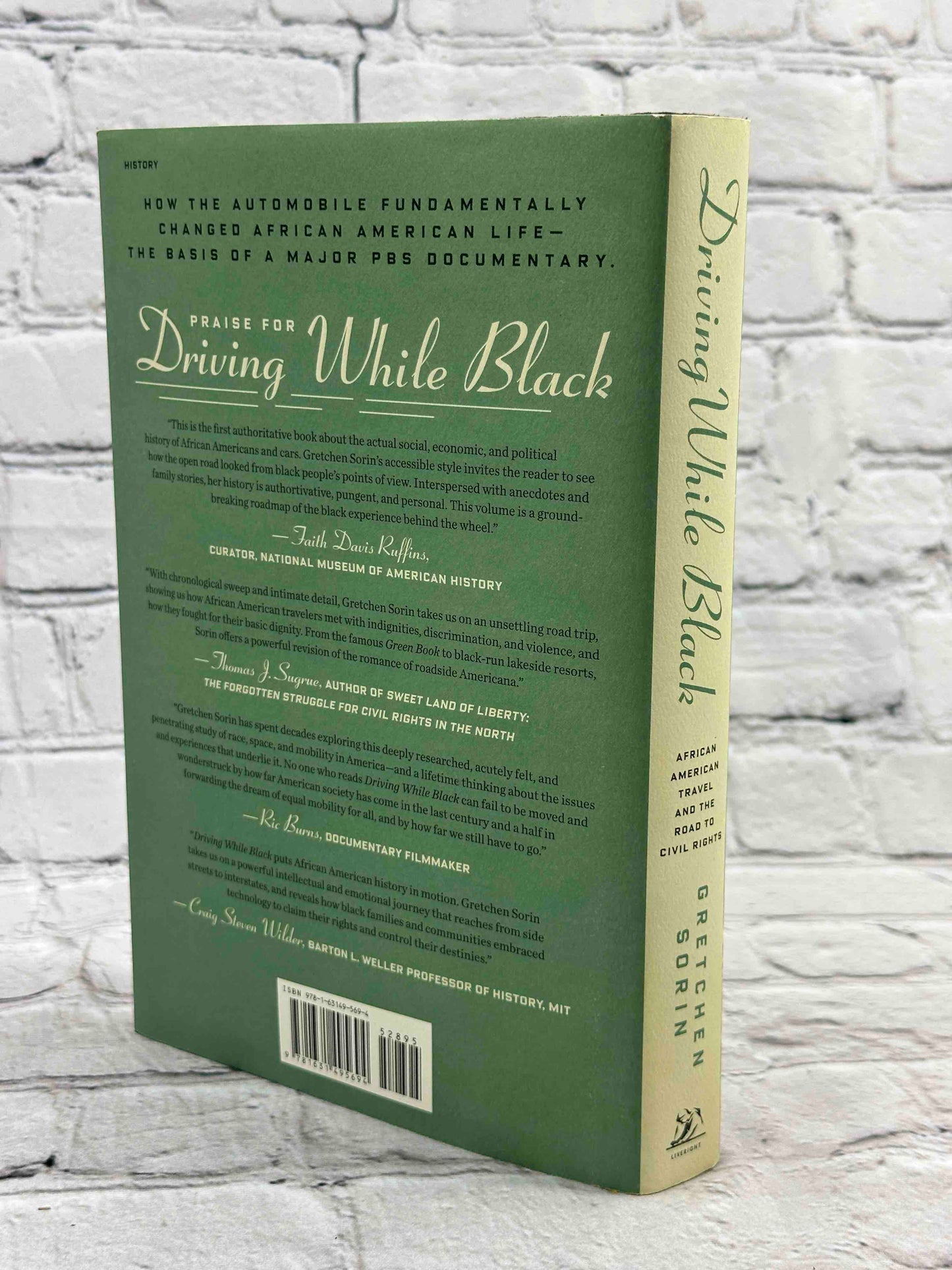
Book Notes: Cover shows minor shelf wear. Pages are in good and in good shape. Binding is tight.
Author(s): Gretchen SorinPrint: 1st
Publication year: 2020
Publication date: 2020-02-11
Pages: 352
Binding: Hardcover
Language: English
Publisher: Liveright
ISBN: 9781631495694Dimensions: 6.3 x 1.2 x 9.3 in
The basis of a major PBS documentary by Gretchen Sorin and Ric Burns (first airing: October 13, 2020 at 9PM ET), this revelatory history shows how the automobile fundamentally changed African American life.
It’s hardly a secret that mobility has always been limited, if not impossible, for African Americans. Before the Civil War, masters confined their slaves to their property, while free black people found themselves regularly stopped, questioned, and even kidnapped. Restrictions on movement before Emancipation carried over, in different forms, into Reconstruction and beyond; for most of the 20th century, many white Americans felt blithely comfortable denying their black countrymen the right to travel freely on trains and buses. Yet it became more difficult to shackle someone who was cruising along a highway at 45 miles per hour.
In Driving While Black, the acclaimed historian Gretchen Sorin reveals how the car―the ultimate symbol of independence and possibility―has always held particular importance for African Americans, allowing black families to evade the many dangers presented by an entrenched racist society and to enjoy, in some measure, the freedom of the open road. She recounts the creation of a parallel, unseen world of black motorists, who relied on travel guides, black only businesses, and informal communications networks to keep them safe. From coast to coast, mom and pop guest houses and tourist homes, beauty parlors, and even large hotels―including New York’s Hotel Theresa, the Hampton House in Miami, or the Dunbar Hotel in Los Angeles―as well as night clubs and restaurants like New Orleans’ Dooky Chase and Atlanta’s Paschal’s, fed travelers and provided places to stay the night. At the heart of Sorin’s story is Victor and Alma Green’s famous Green Book, a travel guide begun in 1936, which helped grant black Americans that most basic American rite, the family vacation.
As Sorin demonstrates, black travel guides and black-only businesses encouraged a new way of resisting oppression. Black Americans could be confident of finding welcoming establishments as they traveled for vacation or for business. Civil Rights workers learned where to stay and where to eat in the South between marches and protests. As Driving While Black reminds us, the Civil Rights Movement was just that―a movement of black people and their allies in defiance of local law and custom. At the same time, she shows that the car, despite the freedoms it offered, brought black people up against new challenges, from segregated ambulance services to unwarranted traffic stops, and the racist violence that too often followed.
Interwoven with Sorin’s own family history and enhanced by dozens of little known images, Driving While Black charts how the automobile fundamentally reshaped African American life, and opens up an entirely new view onto one of the most important issues of our time.
74 black-and-white illustrations
Shipping & Returns
Shipping & Returns
Shipping costs are calculated based on the weight of the item and the delivery location. We ship via Media Mail or Ground Advantage through USPS.
Shop with Confidence!
We stand by the quality of our books. If for any reason you’re unsatisfied with your purchase, we offer a 100% full refund along with free return shipping.
Share

Book Condition Scale
-
Like New
This book is in excellent condition and appears to have been read only once. The pages are clean and unmarked, with no creases or stains. The binding remains firm and tight. There may be minimal signs of shelf wear on the cover or dust jacket, but overall, the book looks and feels nearly new.
-
Very Good
This book has been read but remains in great condition. It does not look new, yet there is no obvious damage to the cover. Wear and tear are minimal. The pages are clean, free of highlighting or notes, though it may contain identifying marks from a previous owner or bookstore.
-
Good
This book shows moderate to heavy signs of wear that can include creases, stains or tears. The cover may have minimal damage, and the binding remains intact with slight wear. The majority of pages are undamaged, though there may be some highlighting, underlining, or notes. It may also contain identifying marks from a previous owner or bookstore.
-
Acceptable
This book shows significant wear, which may include tears, large stains, creases, loose pages, and heavy notes, underlining, or highlighting. The binding may be loose but remains intact. While it has noticeable imperfections, it is still a complete and readable copy. Any major defects will be clearly noted in the listing.
-
As Described
This book is visibly worn and may be heavily soiled, scuffed, stained, or spotted. It may have loose joints, hinges, or pages, and some text or pages may be missing. Large tears and other significant defects may be present. While still a readable copy, it shows substantial signs of use. Any major flaws will be clearly noted in the listing.
-
Dust Jacket Grading
(A) Excellent
The dust jacket is in excellent condition, may show the slightest signs of shelf wear, if any.(B) Good
Shows minor shelf wear, usually along edges and may have a few light stains.(C) Fair
Displays moderate shelf wear, including some noticeable small tears, creasing and/or stains.(D) Poor
Contains large tears, several creases, and/or heavy staining.(F) As Is
Shows significant wear and tear. Majority of dust jacket is torn or missing. May contain heavy staining.
