


Enlightenment embodied: The art of the Japanese Buddhist sculptor (7th-14th centuries)
Enlightenment embodied: The art of the Japanese Buddhist sculptor (7th-14th centuries)
Couldn't load pickup availability
Author(s): Roge Goepper, Reiko Tomii, Washizuka Hiromitsu, Hiromits Washizuka
Publication year: 1997
Publication date: 1997-01-01
Pages: 152
Binding: Paperback
Language: English
Publisher: Agency for Cultural Affairs (Bunka-Cho), Government of Japan, Japan Society
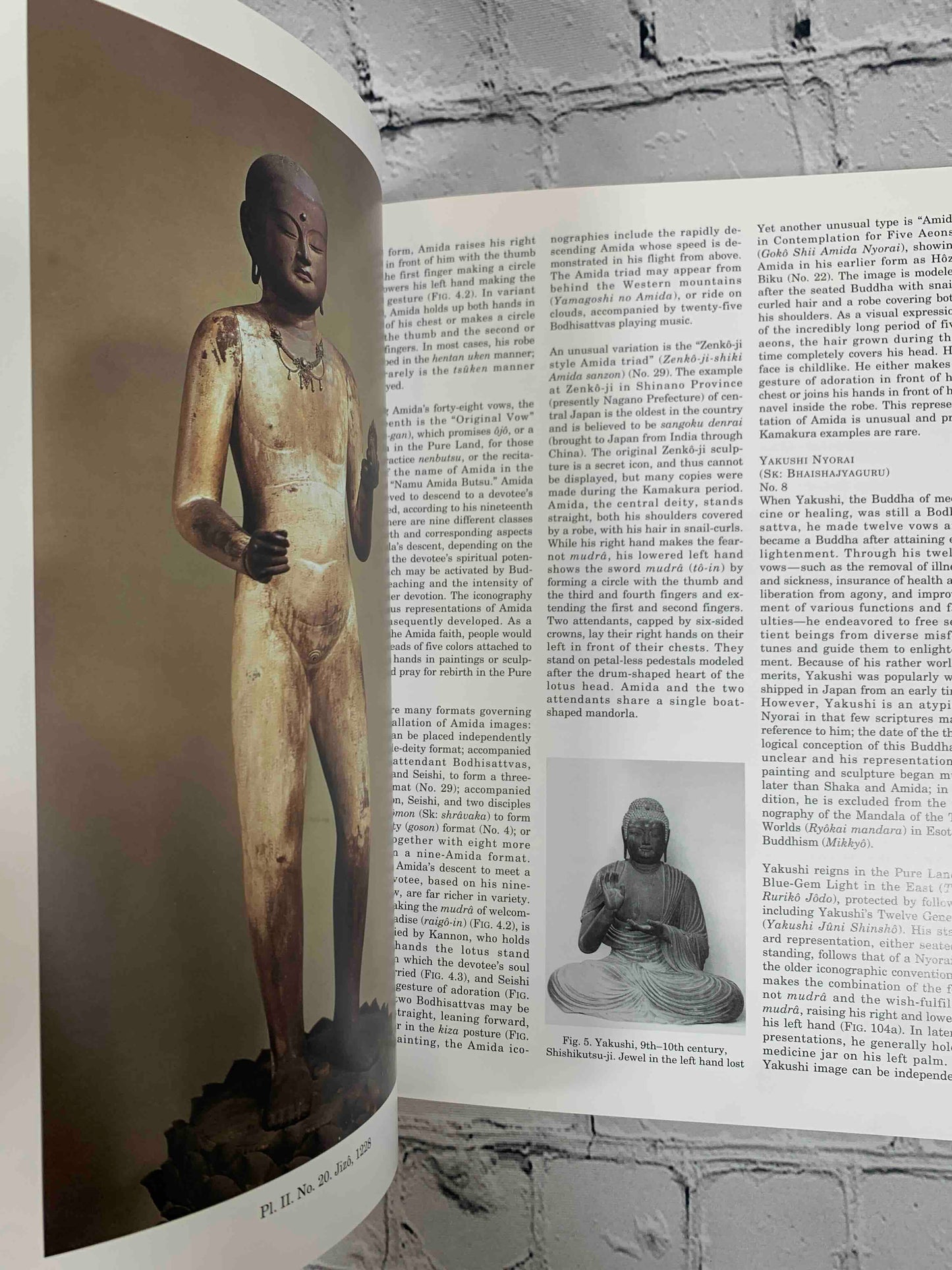
ISBN: 0913304433The exhibition contains 32 individual and group sculptures, all masterpieces of which many could be seen only in Japan. The statues range from peaceful, reflective and self-contained Buddhas ("ones who have awakened to the truth") to fanged and ferocious protective deities, assuming aggressive postures, their muscles and eyeballs bulging as they strive to cut through ignorance and defend Buddhist Law. A section of the exhibition is devoted to sculptural images depicting stages in the life to the historical Buddha, known in Japan as Shaka. The exhibition also displays examples from the major schools of Buddhism that flourished in Japan through the 14th century, including works from Esoteric Buddhism, and the Pure Land Sect. The exhibition also provides a broad perspective on the evolving tradition of the Buddhist sculptor, busshi, in Japan hand-in-hand with the evolution of construction techniques. Works attributed to the great schools of Buddhist sculpture as well as some primitive provincial masterpieces show the development of various techniques. Particular attention is devoted to wood sculptures made with the joined-block technique, which not only enabled sculptors to create larger, crack-resistant works more rapidly, but to produce sculptures with hollow interiors in which texts and sacred relics could be stored. Also included are sculptures made of other materials such as the statue of Gokei Monju, the Bodhisattva with five topknots, made of paper. This is the only paper Buddhist sculpture from the medieval period. This catalog is an essential reference work for students, scholars and those interested in Japanese Buddhist sculptor's techniques.
Shipping & Returns
Shipping & Returns
Shipping costs are calculated based on the weight of the item and the delivery location. We ship via Media Mail or Ground Advantage through USPS.
Shop with Confidence!
We stand by the quality of our books. If for any reason you’re unsatisfied with your purchase, we offer a 100% full refund along with free return shipping.
Share


Book Condition Scale
-
Like New
This book is in excellent condition and appears to have been read only once. The pages are clean and unmarked, with no creases or stains. The binding remains firm and tight. There may be minimal signs of shelf wear on the cover or dust jacket, but overall, the book looks and feels nearly new.
-
Very Good
This book has been read but remains in great condition. It does not look new, yet there is no obvious damage to the cover. Wear and tear are minimal. The pages are clean, free of highlighting or notes, though it may contain identifying marks from a previous owner or bookstore.
-
Good
This book shows moderate to heavy signs of wear that can include creases, stains or tears. The cover may have minimal damage, and the binding remains intact with slight wear. The majority of pages are undamaged, though there may be some highlighting, underlining, or notes. It may also contain identifying marks from a previous owner or bookstore.
-
Acceptable
This book shows significant wear, which may include tears, large stains, creases, loose pages, and heavy notes, underlining, or highlighting. The binding may be loose but remains intact. While it has noticeable imperfections, it is still a complete and readable copy. Any major defects will be clearly noted in the listing.
-
As Described
This book is visibly worn and may be heavily soiled, scuffed, stained, or spotted. It may have loose joints, hinges, or pages, and some text or pages may be missing. Large tears and other significant defects may be present. While still a readable copy, it shows substantial signs of use. Any major flaws will be clearly noted in the listing.
-
Dust Jacket Grading
(A) Excellent
The dust jacket is in excellent condition, may show the slightest signs of shelf wear, if any.(B) Good
Shows minor shelf wear, usually along edges and may have a few light stains.(C) Fair
Displays moderate shelf wear, including some noticeable small tears, creasing and/or stains.(D) Poor
Contains large tears, several creases, and/or heavy staining.(F) As Is
Shows significant wear and tear. Majority of dust jacket is torn or missing. May contain heavy staining.
