


Japanese Homes and Their Surroundings (Dover Architecture)
Japanese Homes and Their Surroundings (Dover Architecture)
Couldn't load pickup availability
Book Notes: Contains minor shelf wear. Pages are clean and in goods shape. Binding is tight
Author(s): Edward S. Morse
Publication year: 1961
Publication date: 1961-06-01
Pages: 416
Binding: Paperback
Language: English
Publisher: Dover Publications
ISBN: 0486207463Dimensions: 5.6 x 0.81 x 8.19 in
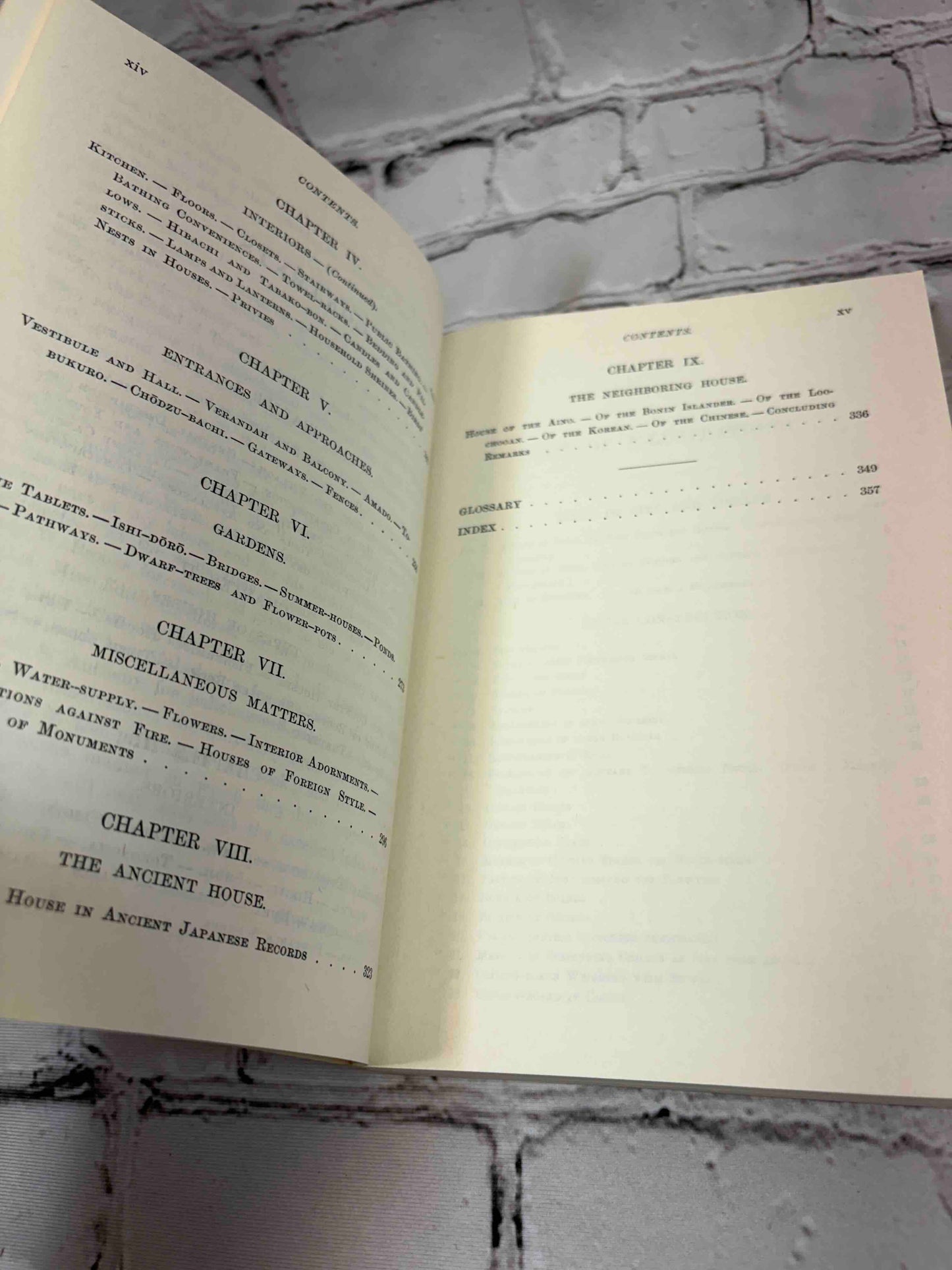
This work deals with every aspect of the traditional Japanese home, from its general plan and major structural features to such ceremonial and traditional appointments as the tatami mats (which actually determine the size of the house), lamps, hibachi (braziers), fusuma and shoji screens, candlesticks, pillows, and tokonoma (places where art objects or flowers are displayed). It covers details of both construction and architectural ornamentation, and it points out the many ways in which the traditional Japanese house achieved the almost ideal blend of art and nature, decoration, and stark simplicity that is its hallmark. It shows in detail such things as how natural irregularities (such as in logs) are used to advantage, how partitions change the shape of the interior, and how the garden with its bridges, lanterns, and natural forms (sometimes artfully wrought) complements the severity of the house itself. More than 300 drawings by the author illustrate the text.
Morse was one of the first to try to see and understand a dwelling in terms of the culture and tradition of the people who live in it. As a result, this work, which for three generations has remained the most informative and exhaustive discussion in English of the Japanese home, is equally honored for its strikingly modern conception of architecture and, more particularly, of the Japanese home as a place where people live.
Since this work was first published, many of the traditional features of the Japanese home have altered under the impact of Western ideas. The work, consequently, should be particularly valuable to contemporary architects, artists, structural engineers, and scholars who want a purer view of the traditional Japanese dwelling. Because of its wealth of suggestion, it will also prove valuable to designers and craftsmen. For laymen, it continues to offer insight into a type of architecture (and a way of life) that is having an increasing impact on Western ideas.
Shipping & Returns
Shipping & Returns
Shipping costs are calculated based on the weight of the item and the delivery location. We ship via Media Mail or Ground Advantage through USPS.
Shop with Confidence!
We stand by the quality of our books. If for any reason you’re unsatisfied with your purchase, we offer a 100% full refund along with free return shipping.
Share


Book Condition Scale
-
Like New
This book is in excellent condition and appears to have been read only once. The pages are clean and unmarked, with no creases or stains. The binding remains firm and tight. There may be minimal signs of shelf wear on the cover or dust jacket, but overall, the book looks and feels nearly new.
-
Very Good
This book has been read but remains in great condition. It does not look new, yet there is no obvious damage to the cover. Wear and tear are minimal. The pages are clean, free of highlighting or notes, though it may contain identifying marks from a previous owner or bookstore.
-
Good
This book shows moderate to heavy signs of wear that can include creases, stains or tears. The cover may have minimal damage, and the binding remains intact with slight wear. The majority of pages are undamaged, though there may be some highlighting, underlining, or notes. It may also contain identifying marks from a previous owner or bookstore.
-
Acceptable
This book shows significant wear, which may include tears, large stains, creases, loose pages, and heavy notes, underlining, or highlighting. The binding may be loose but remains intact. While it has noticeable imperfections, it is still a complete and readable copy. Any major defects will be clearly noted in the listing.
-
As Described
This book is visibly worn and may be heavily soiled, scuffed, stained, or spotted. It may have loose joints, hinges, or pages, and some text or pages may be missing. Large tears and other significant defects may be present. While still a readable copy, it shows substantial signs of use. Any major flaws will be clearly noted in the listing.
-
Dust Jacket Grading
(A) Excellent
The dust jacket is in excellent condition, may show the slightest signs of shelf wear, if any.(B) Good
Shows minor shelf wear, usually along edges and may have a few light stains.(C) Fair
Displays moderate shelf wear, including some noticeable small tears, creasing and/or stains.(D) Poor
Contains large tears, several creases, and/or heavy staining.(F) As Is
Shows significant wear and tear. Majority of dust jacket is torn or missing. May contain heavy staining.
