


The Colors of Japan: Background, Characteristics and Creation
The Colors of Japan: Background, Characteristics and Creation
Couldn't load pickup availability
Author(s): Sadao Hibi
Publication year: 2001
Publication date: 2001-04-24
Pages: 104
Binding: Hardcover
Language: English
Publisher: Kodansha USA
ISBN: 9784770025364Dimensions: 9.7 x 1.0 x 9.5 in
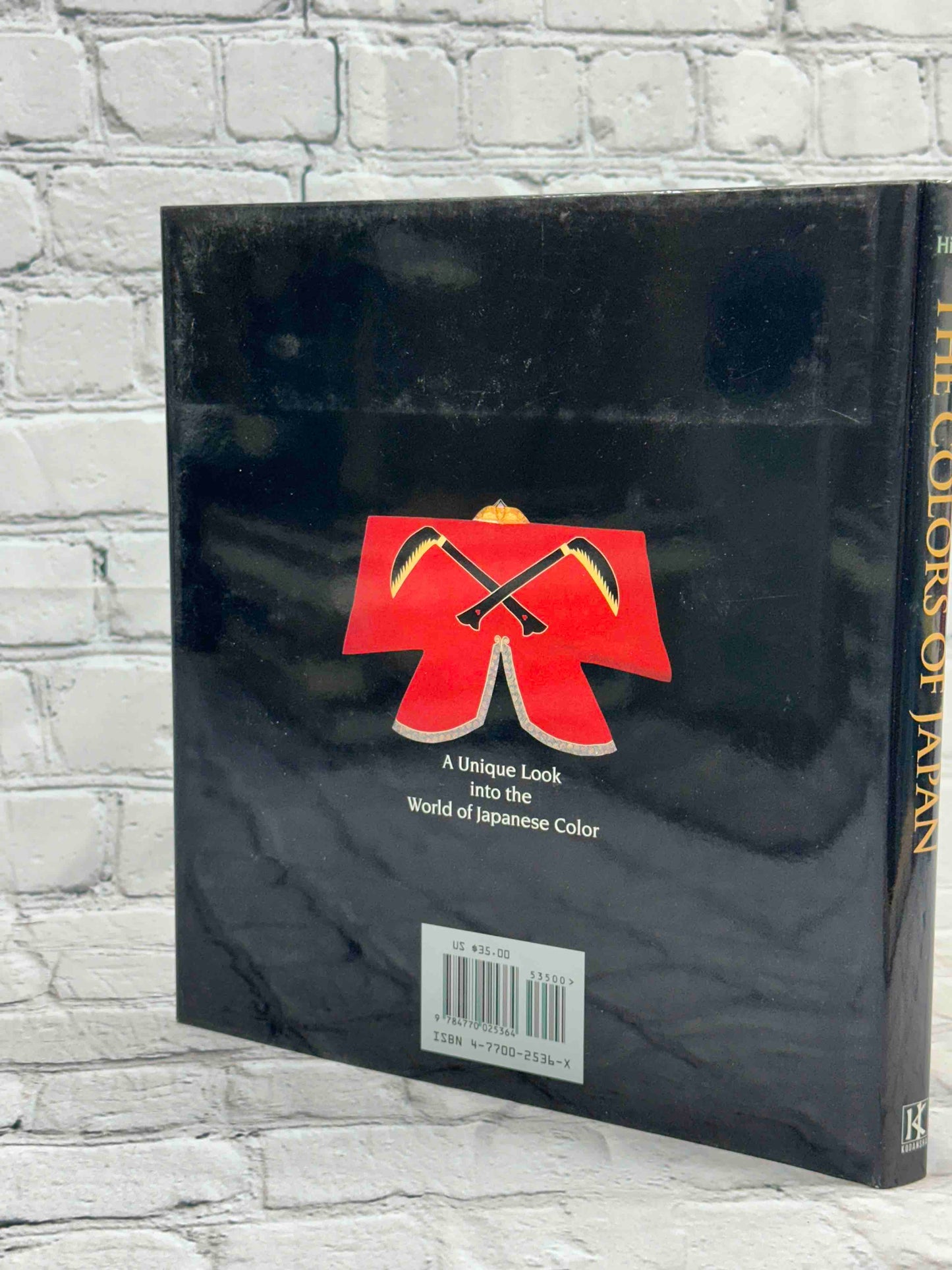
The Colors of Japan is a visually stunning look into the unique use of color in Japanese culture from prehistoric times to the present day. That the Japanese should possess their own sense of color is not surprising, for like almost every other aspect of human life, color perception varies from culture to culture.
The first and most fundamental reason for this variation can be attributed to geography. People living in arid lands will obviously perceive green in a different way from people surrounded by lush forests, as is the case in Japan. Geography will also dictate the materials that can be used to create the pigments and dyes to color objects.
Once geography has set the stage, other factors come into play, such as the direction in which a particular culture evolves. For instance, certain colors may be restricted to certain classes, as happened in the classical period of Japanese history.
A third factor is external cultural influence, in which the color perceptions of one culture are adopted by another as part of the ebb and flow of history. In the case of Japan, the first sources of such influence were Korea and China.
The Colors of Japan presents a crystalline overview of these three factors by means of discerning writing and stunning photographs. The text covers the four basic colors, the relationship of Japanese color perception to natural phenomena, the development of hierarchies of colors, the aesthetic of mixed colors, and the particular culture of color developed by townspeople in the seventeenth through the nineteenth centuries.
The photographs range over a variety of objects, from the refined to the plebeian. There are lacquerware, various kimonos, combs, surcoats, picture scrolls, ceramics, sword mountings, shrine gates, paintings, woodblock prints, tea houses, a castle, paper stencils, fans, sculpture, umbrellas, screens, and human figures. Each is not only an illustration of a particular color as used in Japanese culture, but also a beautiful object in its own right. Nature, an all-important player in the nurturing of color perception, is not forgotten. The book includes lovely photographs of autumn foliage, a horseradish field, a pebbly stream in a temple garden, a tea house pathway, rows of tea bushes, and, last but not least, a tiny green frog.
As an approach to a different way of viewing color, as an introduction to the arts and crafts of Japan, or as a satisfying reading experience, The Colors of Japan is a book that anyone who possesses a aesthetic outlook on life will not want to miss.
The book includes full-color photos of the following:
Torii gates at Fushimi Inari Shrine, negoro trays, negoro sake keg, lacquered wood combs, textile designs and motifs, jimbaori (surcoat worn over armor), furisode kimono, Nachi Fire Festival, autumn foliage at Muroji Temple, Ban Dainagon picture scrolls, various forms of Imari ware, sword mountings, suit of armor, noren curtains, katabira kimono, paintings, Kyoto hills, various forms of Nabeshima ware, aizuri and other ukiyo-e, haniwa funeral sculpture, Jomon vase, tea-scoop and case, Joan Tea House, fireman's hanten, paper stencils, carving on gate of Toshogu Shrine, horseradish field, pebble stream at Shinnyo-in Temple, Fushin-an Tea House, ukiyo-e by Katsukawa Shunsho, ukiyo-e by Utagawa Kunisada using berorin, Iga vase, sanda tiered celadon boxes, Oribe mukozuke (side dishes), a green frog (aogaeru), Japanese zelkova bonsai, pair of six-fold screens, green tea plantations, tea in a black bowl, fans, Jizo statue at Meigetsu-in Temple, ikat kimono, uchikake kimono, Konkomyo Saisho-o Sutra, choken Noh costume, silk wrapping cloth, murasaki-e ukiyo-e by Chobunsai Eishi, sacred rope at Oyamazumi Shrine, annual rites at Hibara Shrine, snake-eye (janome) umbrella, dance fans, Kabuki actor Bando Tamasaburo, screen (Pine Trees) by Hasegawa Tohaku, Mino tea bowl, Raku tea bowl ("Ayame"), Himeji Castle, fifth-century gold seal, sobatsugi Noh robe with shokko motif, kariginu kimono, tachi sword mounting, gilded wood statue of Buddha Amida, Edo cosmetic set with tomoe crest, rakuchu-rakugai screen by Kano Eitoku, pair of two-fold screens (Summer and Autumn Grasses) by Sakai Hoitsu, dry lacquer flower vase, and ceramic box with gold and silver on black ground.
Shipping & Returns
Shipping & Returns
Shipping costs are calculated based on the weight of the item and the delivery location. We ship via Media Mail or Ground Advantage through USPS.
Shop with Confidence!
We stand by the quality of our books. If for any reason you’re unsatisfied with your purchase, we offer a 100% full refund along with free return shipping.
Share

Book Condition Scale
-
Like New
This book is in excellent condition and appears to have been read only once. The pages are clean and unmarked, with no creases or stains. The binding remains firm and tight. There may be minimal signs of shelf wear on the cover or dust jacket, but overall, the book looks and feels nearly new.
-
Very Good
This book has been read but remains in great condition. It does not look new, yet there is no obvious damage to the cover. Wear and tear are minimal. The pages are clean, free of highlighting or notes, though it may contain identifying marks from a previous owner or bookstore.
-
Good
This book shows moderate to heavy signs of wear that can include creases, stains or tears. The cover may have minimal damage, and the binding remains intact with slight wear. The majority of pages are undamaged, though there may be some highlighting, underlining, or notes. It may also contain identifying marks from a previous owner or bookstore.
-
Acceptable
This book shows significant wear, which may include tears, large stains, creases, loose pages, and heavy notes, underlining, or highlighting. The binding may be loose but remains intact. While it has noticeable imperfections, it is still a complete and readable copy. Any major defects will be clearly noted in the listing.
-
As Is
This book is visibly worn and may be heavily soiled, scuffed, stained, or spotted. It may have loose joints, hinges, or pages, and some text or pages may be missing. Large tears and other significant defects may be present. While still a readable copy, it shows substantial signs of use. Any major flaws will be clearly noted in the listing.
-
Dust Jacket Grading
(A) Excellent
The dust jacket is in excellent condition, may show the slightest signs of shelf wear, if any.(B) Good
Shows minor shelf wear, usually along edges and may have a few light stains.(C) Fair
Displays moderate shelf wear, including some noticeable small tears, creasing and/or stains.(D) Poor
Contains large tears, several creases, and/or heavy staining.(F) As Is
Shows significant wear and tear. Majority of dust jacket is torn or missing. May contain heavy staining.
