


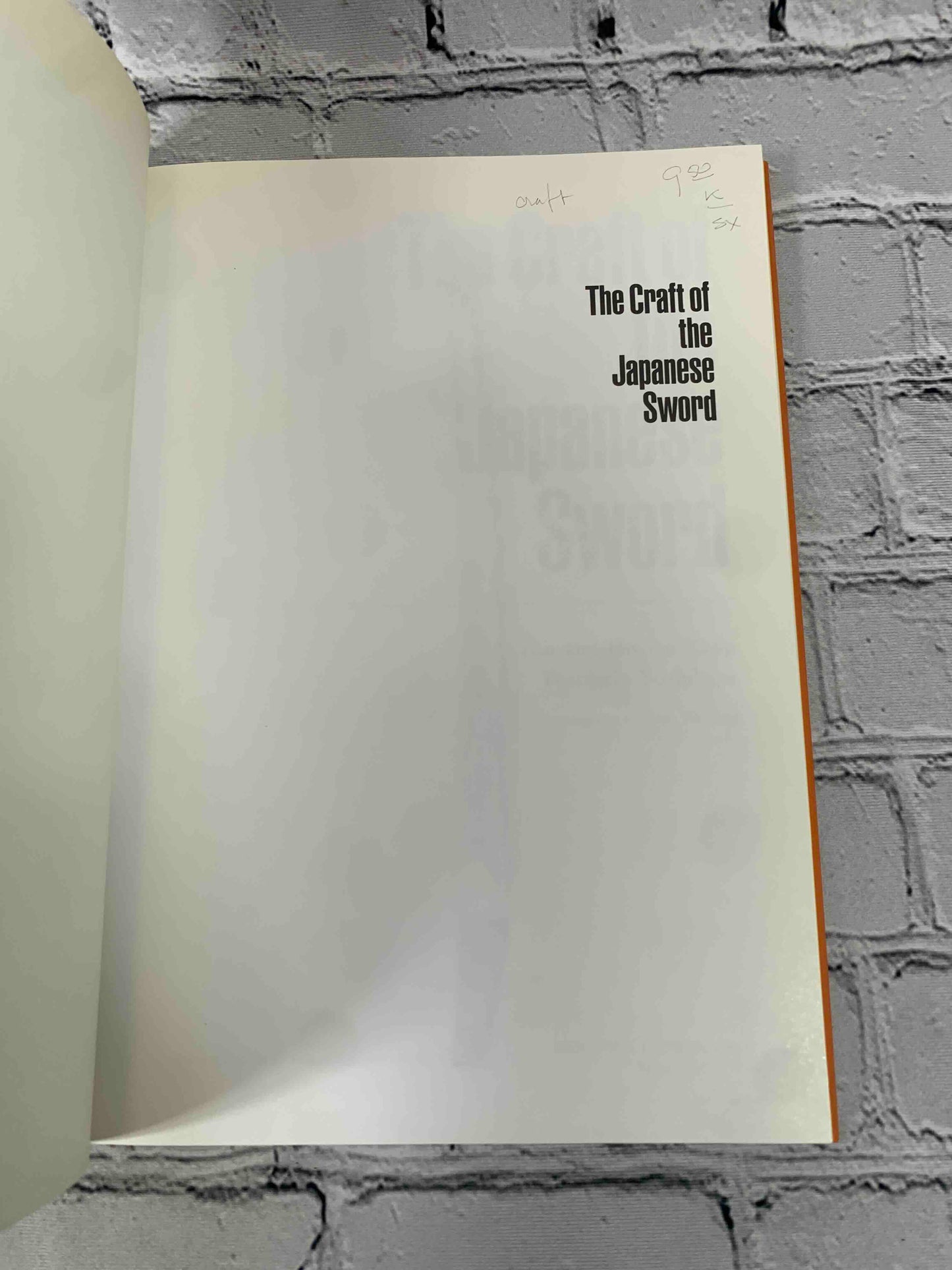
The Craft of the Japanese Sword
The Craft of the Japanese Sword
Couldn't load pickup availability
Author(s): Leon Kapp, Hiroko Kapp, Yoshindo Yoshihara
Edition: 1st Edition
Print: 2nd Printing
Publication year: 1987
Publication date: 1987-06-15
Pages: 168
Binding: Hardcover
Language: English
Publisher: Kodansha USA
ISBN: 9780870117985Dimensions: 10.2 x 0.8 x 7.1 in
Well over a thousand years old, the tradition of swordmaking in Japan is one of the most highly regarded metal crafts in the world. When all sword manufacture was prohibited in Japan for seven years after World War II, the age-old techniques were in danger of being lost forever. Today, in the hands of a new generation of practitioners, the craft is making a startling comeback. Connoisseurs say that the swords being produced now are the equal of anything made in Japan in the past few hundred years.
This book takes the reader into the workshops of four of Japan's leading sword craftsmen. Each craftsman has a different role in the manufacture of a blade. Yoshindo Yoshihara, the swordsmith, begins with raw steel made in a traditional charcoal-fueled smelter and refines it by folding and forging, gradually shaping it into a sword with a hardened edge. Okisato Fujishiro then sharpens and polishes the sword with fine stones to reveal the color and texture of the steel. Metalworker Hiroshi Miyajima makes the small copper-and-gold habaki collar that fits between the blade and the scabbard. Finally, Kazuyuki Takayama carves the hilt and the scabbard out of a single piece of wood. Black-and-white photographs show every stage of the manufacture, while important information on history, metallurgy, and modern-day appraisal is presented in an extensive introduction.
The swords made in Japan today are not, of course, intended for actual use. But their design, the quality of their steel, and the techniques used to create them still derive from the sword's historical function as a lethal hand-held weapon. A sword must be razor sharp, light, well balanced, and strong, but not so brittle it will break. In the perfect resolution of these qualities lie the beauty of the blade and the challenge of the craft.
This book demonstrates how brilliantly Japan's sword craftsmen today have met this technological challenge. The impulse of the craft now is to preserve the utilitarian object and yet create an enduring art for the modern age. While many fine books on sword appreciation exist, these deal primarily with older blades or problems of appraisal. The Craft of the Japanese Sword is the first book in English devoted entirely to contemporary sword manufacture, and will thus be of enormous value to metal artists everywhere, as well as to collectors and students of weaponry.
Shipping & Returns
Shipping & Returns
Shipping costs are calculated based on the weight of the item and the delivery location. We ship via Media Mail or Ground Advantage through USPS.
Shop with Confidence!
We stand by the quality of our books. If for any reason you’re unsatisfied with your purchase, we offer a 100% full refund along with free return shipping.
Share


Book Condition Scale
-
Like New
This book is in excellent condition and appears to have been read only once. The pages are clean and unmarked, with no creases or stains. The binding remains firm and tight. There may be minimal signs of shelf wear on the cover or dust jacket, but overall, the book looks and feels nearly new.
-
Very Good
This book has been read but remains in great condition. It does not look new, yet there is no obvious damage to the cover. Wear and tear are minimal. The pages are clean, free of highlighting or notes, though it may contain identifying marks from a previous owner or bookstore.
-
Good
This book shows moderate to heavy signs of wear that can include creases, stains or tears. The cover may have minimal damage, and the binding remains intact with slight wear. The majority of pages are undamaged, though there may be some highlighting, underlining, or notes. It may also contain identifying marks from a previous owner or bookstore.
-
Acceptable
This book shows significant wear, which may include tears, large stains, creases, loose pages, and heavy notes, underlining, or highlighting. The binding may be loose but remains intact. While it has noticeable imperfections, it is still a complete and readable copy. Any major defects will be clearly noted in the listing.
-
As Is
This book is visibly worn and may be heavily soiled, scuffed, stained, or spotted. It may have loose joints, hinges, or pages, and some text or pages may be missing. Large tears and other significant defects may be present. While still a readable copy, it shows substantial signs of use. Any major flaws will be clearly noted in the listing.
-
Dust Jacket Grading
(A) Excellent
The dust jacket is in excellent condition, may show the slightest signs of shelf wear, if any.(B) Good
Shows minor shelf wear, usually along edges and may have a few light stains.(C) Fair
Displays moderate shelf wear, including some noticeable small tears, creasing and/or stains.(D) Poor
Contains large tears, several creases, and/or heavy staining.(F) As Is
Shows significant wear and tear. Majority of dust jacket is torn or missing. May contain heavy staining.
