


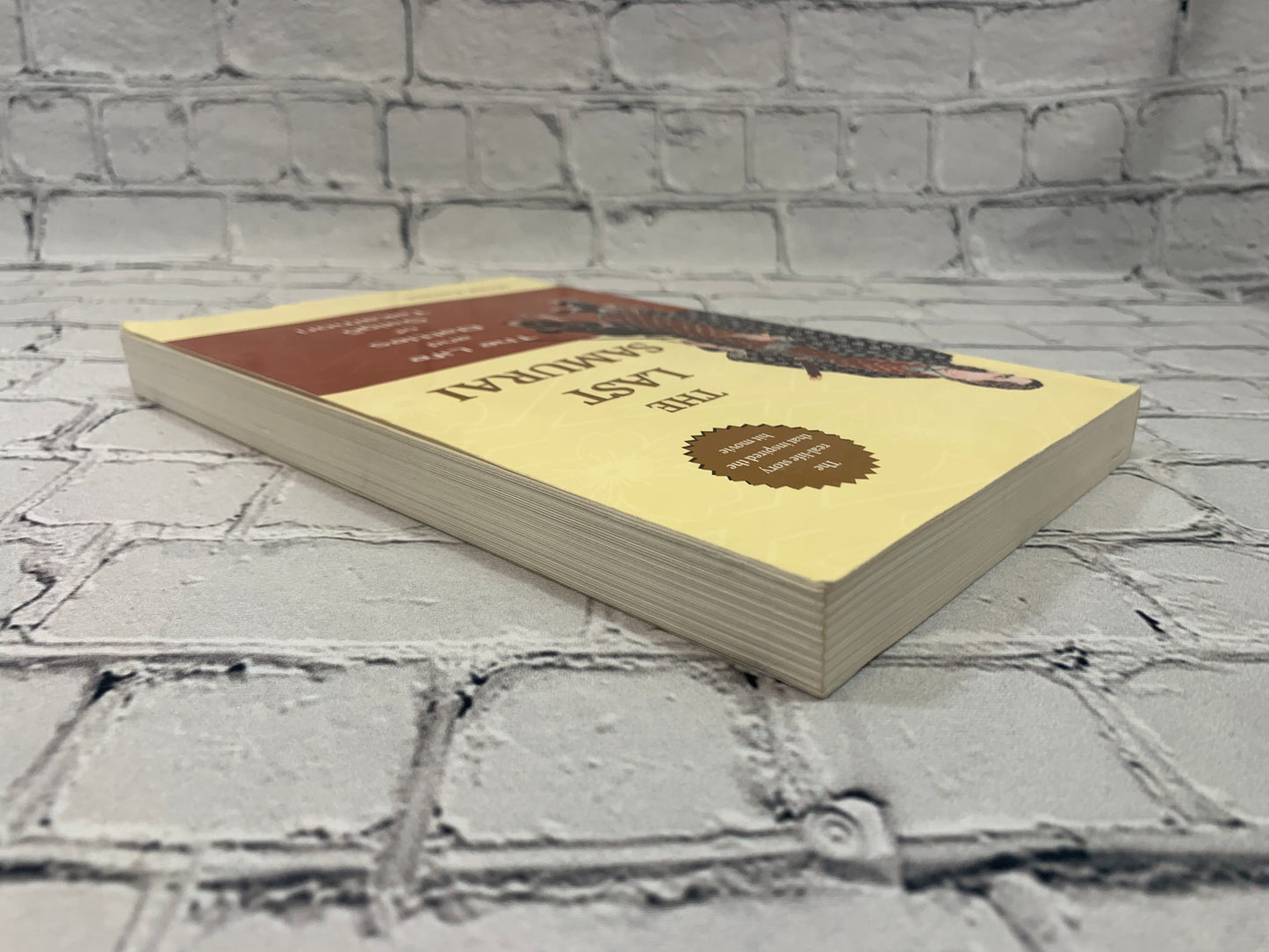
The Last Samurai: The Life and Battles of Saigo Takamori
The Last Samurai: The Life and Battles of Saigo Takamori
Couldn't load pickup availability
Condition Notes: Contains minor shelf wear. Pages are clean and in good Shape. Binding is tight.
Author(s): Mark Ravina
Publication year: 2005
Publication date: 2005-02-07
Pages: 288
Binding: Paperback
Language: English
Publisher: Wiley
ISBN: 0471705373Dimensions: 6.1 x 0.82 x 9.3 in
The dramatic arc of Saigo Takamori's life, from his humble origins as a lowly samurai, to national leadership, to his death as a rebel leader, has captivated generations of Japanese readers and now Americans as well - his life is the inspiration for a major Hollywood film, The Last Samurai, starring Tom Cruise and Ken Watanabe. In this vibrant new biography, Mark Ravina, professor of history and Director of East Asian Studies at Emory University, explores the facts behind Hollywood storytelling and Japanese legends, and explains the passion and poignancy of Saigo's life. Known both for his scholarly research and his appearances on The History Channel, Ravina recreates the world in which Saigo lived and died, the last days of the samurai.
The Last Samurai traces Saigo's life from his early days as a tax clerk in far southwestern Japan, through his rise to national prominence as a fierce imperial loyalist. Saigo was twice exiled for his political activities -- sent to Japan's remote southwestern islands where he fully expected to die. But exile only increased his reputation for loyalty, and in 1864 he was brought back to the capital to help his lord fight for the restoration of the emperor. In 1868, Saigo commanded his lord's forces in the battles which toppled the shogunate and he became and leader in the emperor Meiji's new government. But Saigo found only anguish in national leadership. He understood the need for a modern conscript army but longed for the days of the traditional warrior.
Saigo hoped to die in service to the emperor. In 1873, he sought appointment as envoy to Korea, where he planned to demand that the Korean king show deference to the Japanese emperor, drawing his sword, if necessary, top defend imperial honor. Denied this chance to show his courage and loyalty, he retreated to his homeland and spent his last years as a schoolteacher, training samurai boys in frugality, honesty, and courage. In 1876, when the government stripped samurai of their swords, Saigo's followers rose in rebellion and Saigo became their reluctant leader. His insurrection became the bloodiest war Japan had seen in centuries, killing over 12,000 men on both sides and nearly bankrupting the new imperial government. The imperial government denounced Saigo as a rebel and a traitor, but their propaganda could not overcome his fame and in 1889, twelve years after his death, the government relented, pardoned Saigo of all crimes, and posthumously restored him to imperial court rank.
In THE LAST SAMURAI, Saigo is as compelling a character as Robert E. Lee was to Americans-a great and noble warrior who followed the dictates of honor and loyalty, even though it meant civil war in a country to which he'd devoted his life. Saigo's life is a fascinating look into Japanese feudal society and a history of a country as it struggled between its long traditions and the dictates of a modern future.
Shipping & Returns
Shipping & Returns
Shipping costs are calculated based on the weight of the item and the delivery location. We ship via Media Mail or Ground Advantage through USPS.
Shop with Confidence!
We stand by the quality of our books. If for any reason you’re unsatisfied with your purchase, we offer a 100% full refund along with free return shipping.
Share


Book Condition Scale
-
Like New
This book is in excellent condition and appears to have been read only once. The pages are clean and unmarked, with no creases or stains. The binding remains firm and tight. There may be minimal signs of shelf wear on the cover or dust jacket, but overall, the book looks and feels nearly new.
-
Very Good
This book has been read but remains in great condition. It does not look new, yet there is no obvious damage to the cover. Wear and tear are minimal. The pages are clean, free of highlighting or notes, though it may contain identifying marks from a previous owner or bookstore.
-
Good
This book shows moderate to heavy signs of wear that can include creases, stains or tears. The cover may have minimal damage, and the binding remains intact with slight wear. The majority of pages are undamaged, though there may be some highlighting, underlining, or notes. It may also contain identifying marks from a previous owner or bookstore.
-
Acceptable
This book shows significant wear, which may include tears, large stains, creases, loose pages, and heavy notes, underlining, or highlighting. The binding may be loose but remains intact. While it has noticeable imperfections, it is still a complete and readable copy. Any major defects will be clearly noted in the listing.
-
As Is
This book is visibly worn and may be heavily soiled, scuffed, stained, or spotted. It may have loose joints, hinges, or pages, and some text or pages may be missing. Large tears and other significant defects may be present. While still a readable copy, it shows substantial signs of use. Any major flaws will be clearly noted in the listing.
-
Dust Jacket Grading
(A) Excellent
The dust jacket is in excellent condition, may show the slightest signs of shelf wear, if any.(B) Good
Shows minor shelf wear, usually along edges and may have a few light stains.(C) Fair
Displays moderate shelf wear, including some noticeable small tears, creasing and/or stains.(D) Poor
Contains large tears, several creases, and/or heavy staining.(F) As Is
Shows significant wear and tear. Majority of dust jacket is torn or missing. May contain heavy staining.
