


The Structure of Detachment: The Aesthetic Vision of Kuki Shuzo: With a Translation of Iki no kozo
The Structure of Detachment: The Aesthetic Vision of Kuki Shuzo: With a Translation of Iki no kozo
Couldn't load pickup availability
Author(s): Hiroshi Nara, J. Thomas Rimer, Jon Mark Mikkelsen
Print: 1st Print
Publication year: 2004
Publication date: 2004-01-01
Pages: 256
Binding: Hardcover
Language: English
Publisher: Univ of Hawaii Pr
ISBN: 9780824827359Dimensions: 6.25 x 0.75 x 9.0 in
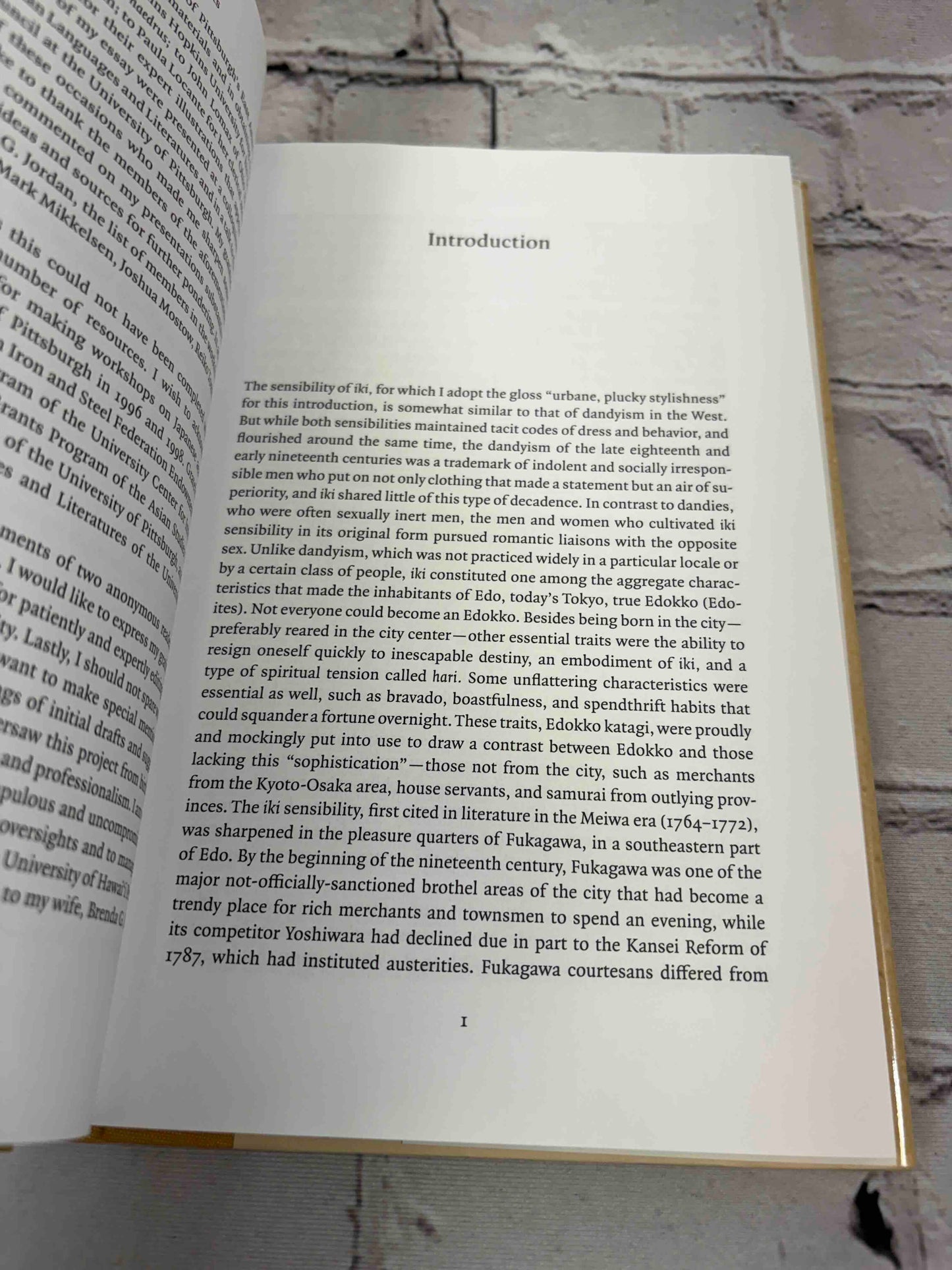
Published in 1930, when Japan was struggling to define and assert its national and cultural identity, The Structure of Iki (Iki no kozo) re-introduced the Japanese to a sophisticated tradition of urbane and spirited stylishness (iki) that was forged in the Edo period. Upon his return from Europe, Kuki Shuzo (1888-1941) made use of the new theoretical frameworks based on Western Continental methodology to redefine iki's significance in Japanese society and culture. By applying Heidegger's hermeneutics to this cultural phenomenon, he attempted to recast traditional understanding in the context of Western aesthetic theory and reestablish the centrality of a purely Japanese sense of "taste."
Because of its impact on the modern Japanese understanding of traditional culture and character, The Structure of Iki has inspired great interest and debate among scholars examining Kuki's role in the formation of a national aesthetics in the years prior to World War II. The three critical essays that accompany this new translation of The Structure of Iki look at various aspects of Kuki, his work, and the historical context that influenced his thinking. Hiroshi Nara first traces Kuki's interest in a philosophy of life through his exposure to Husserl, Heidegger, and Bergson. In the second essay, J. Thomas Rimer compels readers to reexamine The Structure of Iki as a work in the celebrated tradition of zuihitsu (stream-of-consciousness writings) and takes into account French literary influences on Kuki. The philosopher's controversial link with Heidegger is explored by Jon Mark Mikkelsen in the final essay.
Shipping & Returns
Shipping & Returns
Shipping costs are calculated based on the weight of the item and the delivery location. We ship via Media Mail or Ground Advantage through USPS.
Shop with Confidence!
We stand by the quality of our books. If for any reason you’re unsatisfied with your purchase, we offer a 100% full refund along with free return shipping.
Share


Book Condition Scale
-
Like New
This book is in excellent condition and appears to have been read only once. The pages are clean and unmarked, with no creases or stains. The binding remains firm and tight. There may be minimal signs of shelf wear on the cover or dust jacket, but overall, the book looks and feels nearly new.
-
Very Good
This book has been read but remains in great condition. It does not look new, yet there is no obvious damage to the cover. Wear and tear are minimal. The pages are clean, free of highlighting or notes, though it may contain identifying marks from a previous owner or bookstore.
-
Good
This book shows moderate to heavy signs of wear that can include creases, stains or tears. The cover may have minimal damage, and the binding remains intact with slight wear. The majority of pages are undamaged, though there may be some highlighting, underlining, or notes. It may also contain identifying marks from a previous owner or bookstore.
-
Acceptable
This book shows significant wear, which may include tears, large stains, creases, loose pages, and heavy notes, underlining, or highlighting. The binding may be loose but remains intact. While it has noticeable imperfections, it is still a complete and readable copy. Any major defects will be clearly noted in the listing.
-
As Is
This book is visibly worn and may be heavily soiled, scuffed, stained, or spotted. It may have loose joints, hinges, or pages, and some text or pages may be missing. Large tears and other significant defects may be present. While still a readable copy, it shows substantial signs of use. Any major flaws will be clearly noted in the listing.
-
Dust Jacket Grading
(A) Excellent
The dust jacket is in excellent condition, may show the slightest signs of shelf wear, if any.(B) Good
Shows minor shelf wear, usually along edges and may have a few light stains.(C) Fair
Displays moderate shelf wear, including some noticeable small tears, creasing and/or stains.(D) Poor
Contains large tears, several creases, and/or heavy staining.(F) As Is
Shows significant wear and tear. Majority of dust jacket is torn or missing. May contain heavy staining.
