


Working Toward Whiteness: How America’s Immigrants Became White
Working Toward Whiteness: How America’s Immigrants Became White
Couldn't load pickup availability
Author(s): David R. Roediger
Edition: 1st Edition
Print: 1st Printing
Publication year: 2005
Binding: Hardcover
Language: English
Publisher: Basic Books
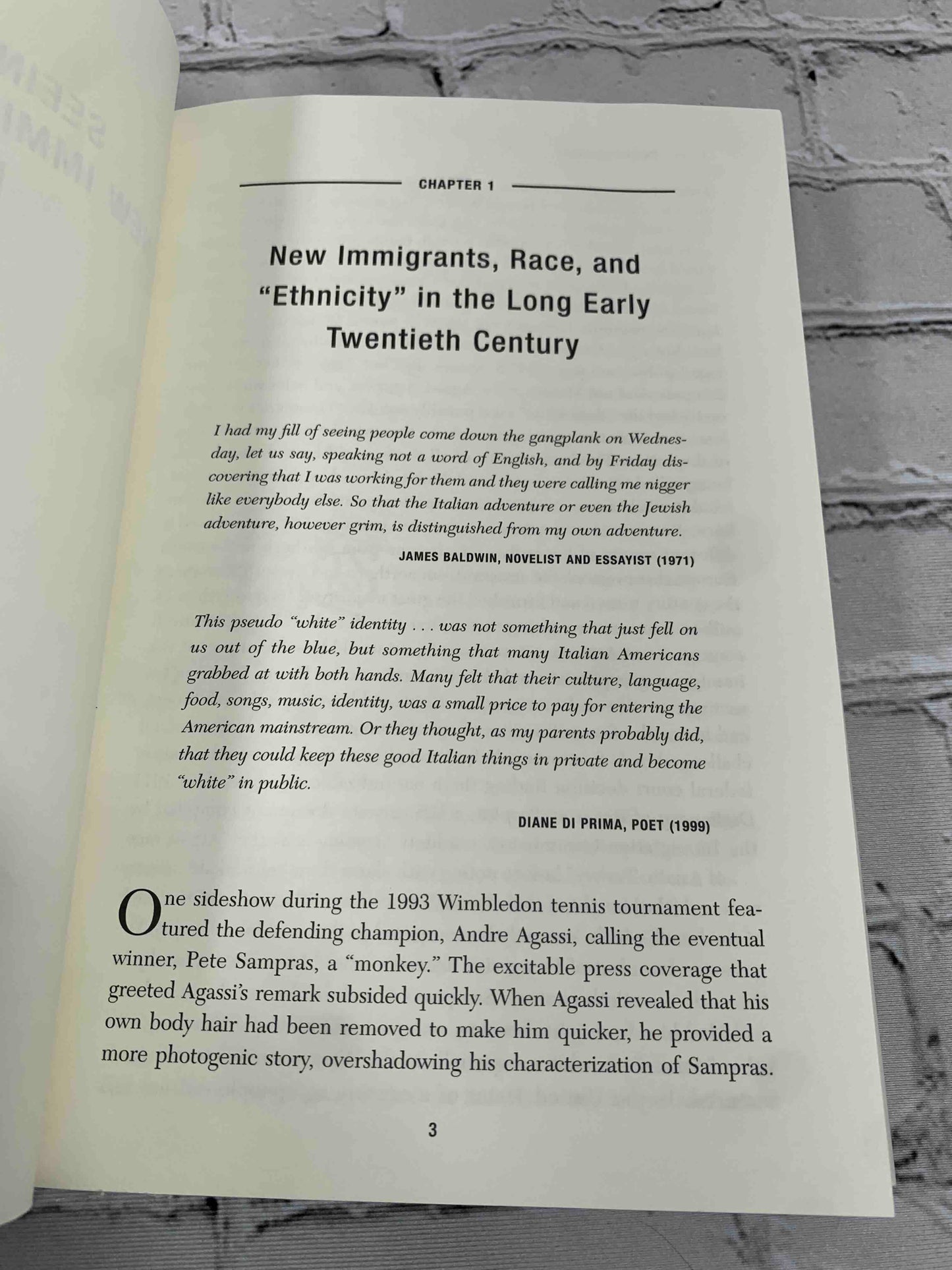
ISBN:Working Toward Whiteness explores how various European immigrant groups in the United States—such as Italian, Jewish, and Polish Americans—gradually came to be regarded as “white” during the early twentieth century. Historian David R. Roediger argues that these communities were not always fully accepted as white by the dominant Anglo-American society and often occupied an ambiguous racial status upon their arrival.
Drawing on labor history, immigration policy, and social change, Roediger traces how factors such as the labor movement, New Deal reforms, suburban homeownership, and restrictive immigration laws reshaped racial categories in the United States. Over time, many European immigrants gained social and economic advantages associated with whiteness and became integrated into mainstream American identity.
The book examines the complex process by which racial identities were constructed and redefined in modern America, revealing how shifting definitions of race influenced class relations, housing patterns, and social attitudes. By charting the transformation of immigrant communities into “white ethnics,” Roediger offers a historical perspective on the relationship between immigration, race, and privilege in twentieth-century America.
Shipping & Returns
Shipping & Returns
Shipping costs are calculated based on the weight of the item and the delivery location. We ship via Media Mail or Ground Advantage through USPS.
Shop with Confidence!
We stand by the quality of our books. If for any reason you’re unsatisfied with your purchase, we offer a 100% full refund along with free return shipping.
Share


Book Condition Scale
-
Like New
This book is in excellent condition and appears to have been read only once. The pages are clean and unmarked, with no creases or stains. The binding remains firm and tight. There may be minimal signs of shelf wear on the cover or dust jacket, but overall, the book looks and feels nearly new.
-
Very Good
This book has been read but remains in great condition. It does not look new, yet there is no obvious damage to the cover. Wear and tear are minimal. The pages are clean, free of highlighting or notes, though it may contain identifying marks from a previous owner or bookstore.
-
Good
This book shows moderate to heavy signs of wear that can include creases, stains or tears. The cover may have minimal damage, and the binding remains intact with slight wear. The majority of pages are undamaged, though there may be some highlighting, underlining, or notes. It may also contain identifying marks from a previous owner or bookstore.
-
Acceptable
This book shows significant wear, which may include tears, large stains, creases, loose pages, and heavy notes, underlining, or highlighting. The binding may be loose but remains intact. While it has noticeable imperfections, it is still a complete and readable copy. Any major defects will be clearly noted in the listing.
-
As Described
This book is visibly worn and may be heavily soiled, scuffed, stained, or spotted. It may have loose joints, hinges, or pages, and some text or pages may be missing. Large tears and other significant defects may be present. While still a readable copy, it shows substantial signs of use. Any major flaws will be clearly noted in the listing.
-
Dust Jacket Grading
(A) Excellent
The dust jacket is in excellent condition, may show the slightest signs of shelf wear, if any.(B) Good
Shows minor shelf wear, usually along edges and may have a few light stains.(C) Fair
Displays moderate shelf wear, including some noticeable small tears, creasing and/or stains.(D) Poor
Contains large tears, several creases, and/or heavy staining.(F) As Is
Shows significant wear and tear. Majority of dust jacket is torn or missing. May contain heavy staining.
